-
 © Universität Hamburg
News from Universität Hamburg
© Universität Hamburg
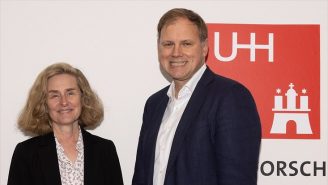
News from Universität HamburgUniversität Hamburg and Indiana University: Successful Cooperation and New Plans for the Future
Pamela Whitten, President of Indiana University visited Universität Hamburg on November 1st, 2022 to discuss current projects and potential additional collaborations. Students and doctoral researchers will also be able to take part in a joint scholarship competition.
-
 © HPI
News from the Hasso-Plattner-Institute
© HPI
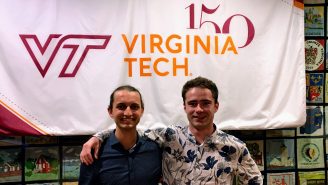
News from the Hasso-Plattner-InstituteOn the Fulbright Scholarship to Virginia Tech
Valentin Döring (22) and Jacob Schäfer (20) are bachelor students of the IT Systems Engineering program at the Hasso Plattner Institute (HPI) and Fulbright Scholars. From August 26 to September 17, 2022, they participated in the three-week Fulbright summer study program “Leaders in Entrepreneurship” at the renowned Virginia Polytechnic Institute and State University.
-
 © Paderborn University
News from Campus OWL
© Paderborn University
News from Campus OWLQuantum Computers in Action
Quantum computers are one of the critical future technologies of the 21st century. They have the edge when it comes to solving complex computing tasks, but they require extremely high computing resources to do this. Researchers at Paderborn University have come up with an algorithm to solve this problem.
-
 © UoC & THE
News from the University of Cologne
© UoC & THE
News from the University of CologneSuccess in THE Rankings: University of Cologne in Top 9% of Universities Worldwide
The University of Cologne has come in at position 146 in the influential THE World University Rankings.
-
 © picture alliance / Westend61
News from Campus OWL
© picture alliance / Westend61
News from Campus OWLUnderstanding Uncertainty
Researchers at Bielefeld University are exploring the benefits of economic uncertainty. Uncertainty plays a key role in the economy: it gives new or small companies the chance to outsmart their established competitors, and it spurs all companies on to be more innovative. As a result, it drives technological change and the emergence of new markets and industries.
-
 Meet the FUTURE FORUM speakers
4 Questions with Michelle Gabriel
The DWIH New York had the pleasure of interviewing Michelle Gabriel, one of the speakers of the FUTURE FORUM: Fabricating the Future on October 7. Michelle is the Graduate Program Director, Sustainable Fashion, at Glasgow Caledonian New York College (GCNYC).
-
 German Studies Association
DWIH New York at the GSA Conference 2022
Our Head of Programs Jan Lüdert and Director Benedikt Brisch participated at the annual German Studies Association conference from September 15 to 18, this year in Houston, Texas.
- DWIH New York
- Topics
- Network
- Research & Innovation
- Activities