Sneak Preview: Handbook of Science Diplomacy at the 2nd European Science Diplomacy Conference

Join us for a special DWIH NY event during the 2nd European Science Diplomacy Conference “Bridging divides in a fragmented world” in Copenhagen.
Against the backdrop of a rapidly changing geopolitical and scientific-technological landscape, science diplomacy is playing an ever more important role in shaping Europe’s international engagement. Building on the expert report A European Framework for Science Diplomacy – Recommendations of the EU Science Diplomacy Working Groups released earlier this year, this conference will examine how science diplomacy can strengthen Europe’s competitiveness, foster innovation, and promote international cooperation.
Sneak Preview: Handbook of Science Diplomacy
Conference Day 2, Thursday, 18 December, 12:45 PM (Room SP201 – Danske Bank Auditorium – 2nd floor)
Presentation and book launch of the “Handbook of Science Diplomacy” with the Editors and Author.
- Jan Lüdert (editor), Head of Programs, German Center for Research and Innovation New York City, DWIH
- Martin Wählisch (editor), Associate Professor of Transformative Technologies, Innovation and Global Affairs, University of Birmingham
- Tim Flink (author), Postdoctoral researcher and a senior lecturer, Political Science and Sociology, Humboldt University of Berlin
- Derya Buyuktanir Karacan (author), Researcher and Adjunct Professor at the Institute for International Science and Technology Policy (IISTP) under the Elliott School of International Affairs, George Washington University
- Rasmus Gjedssø Bertelsen (discussant), Professor of Northern Studies, Barents Chair in Politics, at UiT – The Arctic University of Norway
Artificial intelligence, quantum computing, biotechnology, and other emerging technologies are transforming not only economies and security but also the practice of science diplomacy itself. These developments intensify strategic rivalries, deepen digital divides, and introduce new actors—from tech corporations to science hubs—into the praxis of science diplomacy. At the same time, they open opportunities for actors, networks, and institutions active in science diplomacy for renewed cooperation on shared challenges such as climate change, health, and resilience.
This panel offers a sneak preview of the forthcoming Handbook of Science Diplomacy, edited by Jan Lüdert and Martin Wählisch. Joining the editors is contributing author Tim Flink, whose work on evolving frameworks of science diplomacy helps anchor the volume’s conceptual foundations. Together, they will introduce the book’s core themes and its blend of analytical chapters and global case studies, including semiconductor geopolitics, AI governance, space diplomacy, biological weapons control, gender and STEM, and emerging institutional models.
The conversation will explore how science diplomacy can adapt to rapid technological change and geopolitical polarization—and what tools, norms, and partnerships are required to ensure that scientific and technological advances contribute to international cooperation and the global public good.

Dr. Jan Lüdert is Head of Programs at the German Center for Research and Innovation (DWIH) New York. Jan earned a Ph.D. in Political Science from the University of British Columbia (UBC). He holds Harvard Kennedy’s School Public Leadership Credential; a First-Class Honors MA in International Relations from the Australian National University; and a BA in Public Policy from Hamburg University for Economics and Politics. He previously served as Associate Professor at City University of Seattle where he was the inaugural Director of Curriculum and Instruction. He held positions as Visiting Research Scholar at the Ralph Bunche Institute for International Studies at City University of New York's Graduate Center as well as Research Associate with the DFG 'Dynamics of Security' project at Philipps Marburg University. He is an alumnus of Seattle's World Affairs Council Fellows and UBC Liu Institute for Global Issues Scholar programs.Dr. Jan Lüdert, German Center for Research and Innovation (DWIH) New York
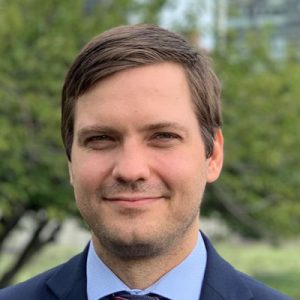
Dr. Martin Waehlisch is the inaugural Associate Professor of Transformative Technologies, Innovation, and Global Affairs at the University of Birmingham. With a strong commitment to interdisciplinary collaboration, he holds dual appointments in the School of Government and the School of Computer Science. He previously served the United Nations for over a decade, working on peace processes (including Lebanon, Iraq, and Yemen), and led the Innovation Cell in the UN Department of Political and Peacebuilding Affairs (UN DPPA) in New York City. He also founded the start-up Office for Dreams, a creative agency supporting public change processes. He has held positions with the Berghof Foundation, the German Federal Foreign Office, and the Center for Peace Mediation. He has additionally been a visiting fellow at Columbia University, the Rhode Island School of Design, New York Law School, the University of Cambridge, Durham University, the American University of Beirut, Université La Sagesse, the Al Jazeera Media Institute, and several other esteemed institutions.Dr. Martin Waehlisch, inaugural Associate Professor of Transformative Technologies, Innovation, and Global Affairs at the University of Birmingham

Dr. Tim Flink is the Manager of Research Policy at the Verband der forschenden Arzneimittelhersteller (vfa), the Association of Research-Based Pharmaceutical Companies in Germany. Previously, he served as a scientific advisor to the German Bundestag, focusing on science diplomacy, EU research policy, health research, and research data infrastructures. As a senior researcher and lecturer in science and innovation policy at Humboldt-Universität zu Berlin and the Berlin Social Science Center (WZB), Dr. Flink conducted extensive work on science policy concepts, the governance of science and technology, and science diplomacy. Prior to his academic career, he served as an advisor to the directors' board at the EU Liaison Office of the German Research Organisations in Brussels.Dr. Tim Flink, Manager of Research Policy, Association of Research-Based Pharmaceutical Companies in Germany

Dr. Derya Buyuktanir Karacan is a researcher and adjunct professor at the Institute for International Science and Technology Policy (IISTP) under the Elliott School of International Affairs of George Washington University, focusing on science diplomacy. She works as a regional coordinator at EURAXESS North America, the European Commission’s international project covering the U.S. and Canada. Dr. Buyuktanir Karacan holds a Ph.D. in Economics and International Relations of the European Union from Ankara University, Turkey. After completing her Ph.D., she continued her studies in the Department of Government at Georgetown University, Washington DC, as a post-doctoral fellow between 2014 and 2015. Following her tenure at Georgetown University, she taught courses on global politics, introduction to international relations, and the European Union as an assistant professor. Besides her academic credentials, she has 13 years of experience as a participant, trainer, or coordinator on different national and international projects supported by the European Commission and the World Bank. Dr. Buyuktanir Karacan served as the guest editor of the peer-reviewed journals Science and Public Policy (Science Diplomacy in the Global South) and Frontiers (Engaging Scientific Diasporas for Development: Policy and Practices). She is also a member of organizations like the Association of Women in Science Diplomacy (WISDA), the American Association for the Advancement of Science (AAAS), and the National Science Policy Network (NSPN).Dr. Derya Büyüktanir Karacan, Researcher and Adjunct Professor at the Institute for International Science and Technology Policy (IISTP), George Washington University

Dr. Rasmus Gjedssø Bertelsen is the inaugural Barents Chair in Politics at UiT The Arctic University of Norway. Recently, 2022-2023, he was also the Nansen (visiting) Professor in Arctic Studies at University of Akureyri, where he focused on researching and connecting the Barents Region and the West Nordic Region. His goal is to combine academic excellence and practical impact in international political, economic, and science affairs, especially in the Arctic context. He has a strong track record of publications, collaborations, and leadership in the fields of international relations, innovation, science and technology studies, and political psychology. He has extensive experience in conducting archives and field research, as well as fostering international academic cooperation and networking. He is passionate about advancing the knowledge and understanding of the Arctic region and its global implications.Dr. Rasmus Gjedssø Bertelsen, inaugural Barents Chair in Politics at UiT The Arctic University of Norway
Event Information
December 17 to 18, 2025
Copenhagen Business School and online
Organizer(s): Danish Presidency of the Council of the European Union, the Royal Danish Academy of Sciences and Letters, the Danish Academy of Technical Sciences, Danish Centre for Studies in Research and Research Policy, Aarhus University, The Danish Council for Research and Innovation Policy and European Commission