Motor Health: Transatlantic Cooperation Strategies and Tech Transfer in Sensorimotor Neuroscience

Join us for a transatlantic panel on advances in sensorimotor research: global health impact, technology transfer, and transatlantic funding opportunities!
Across all demographics and regions worldwide, millions suffer from motor dysfunctions caused by neurological disorders – such as stroke, Parkinson’s disease, multiple sclerosis, cerebral palsy, and traumatic brain and spinal cord injuries – marking the field as a key issue of global health. The relationship between brain signals and physical movements is key in figuring out how the nervous system works, and how it malfunctions in neurological disorders. Understanding this fundamental relationship requires a multidisciplinary exploration across several scientific domains: neuroscience, engineering, computational modeling, biomechanics.
We invite you to join our experts who will present novel cutting-edge multidisciplinary approaches to understand how the nervous system and the body function to generate movement and how their dysfunctions lead to motor deficits. The panelists will also discuss strategies to enhance dialogue between academia and industry to build new open-access technology to decode movement, like the myomatrix arrays developed by the Sober lab. Further, they will discuss how these technological developments could not happen without collaborative efforts across national partners, such as the iBehave network in North Rhine-Westphalia in Germany, and transatlantic cooperations. We aim to raise public awareness on Motor Health and showcase excellent research from Germany and the U.S.
Panelists and the attending transatlantic neuroscientists will have the opportunity to gain new partners, raise awareness for the topic in other stakeholders and the public, while also possibly identifying funding resources. A networking reception following the panel discussion will facilitate further exchange of ideas and ideally spark new international cooperations.
Discussion: Motor Health - Transatlantic Cooperation and Tech Transfer in Sensorimotor Neuroscience

To play the video, click the thumbnail. Once activated data will be transmitted to the respective provider. Watch on YouTube
Our Experts

Dr. Graziana Gatto is a professor for Neurobiology of Motor Control at University of Cologne since 2023. Her lab studies the neuromechanical mechanisms underlying locomotor flexibility. Graziana Gatto studied Biotechnology at the University of Naples, did her PhD in Neurobiology at the Max Planck Institute of Neurobiology in Munich, and her Postdoc at the Salk Institute in San Diego. Her lab combines intersectional genetic, behavioral, comparative biology and computational approaches to understand the principles governing motor flexibility. Dr. Gatto served as Project Manager for the NIH-U19 Consortium “Spinal Circuits for the Control of Dexterous Movement” and is a board member of the iBehave Network, a research consortium for Neuroscience and Behavior in North-Rhine-Westphalia.Dr. Graziana Gatto, Professor for Neurobiology of Motor Control at the University Hospital Cologne

Dr. Alice Mosberger is an Assistant Professor at the Institute for Translational Neuroscience at NYU Grossman School of Medicine. She received her BSc and MSc from the University of Zürich in 2009/2010, and a Dr Sc in Biology from the Swiss Federal Institute of Technology (ETH) Zürich in 2015, for her work in the field of forelimb motor recovery after spinal cord injury and stroke. Her research was supported by an ETH Research Grant and the Christopher and Dana Reeve Foundation. Dr. Mosberger performed her postdoctoral training at the Zuckerman Institute at Columbia University where her work was funded by the Swiss National Science Foundation and the BRAIN Initiative. Her postdoctoral work dissected the roles of cortical and thalamic networks in controlling reaches to spatial targets in mice and showed that mice can learn different reaching strategies (endpoint vs direction based). In 2025, Dr. Mosberger started her independent research as faculty at NYU Langone Health, where her lab uses novel mouse behavior tasks to investigate how reaching movements are generated under feedback and feedforward control.Dr. Alice Mosberger, Assistant Professor for Translational Neuroscience at NYU Grossman School of Medicine

Dr. Victoria Abraira is an Associate Professor of Cell Biology and Neuroscience at Rutgers University. With expertise in mouse molecular genetics, Dr. Abraira’s research is dedicated to unraveling the complexities of the somatosensory systems. Her work examines the underlying mechanisms of touch, pain, and proprioception, focusing on the intricate spinal cord circuits that govern these fundamental sensory experiences. Dr. Abraira’s academic journey is marked by a robust foundation in systems neuroscience. During her Ph.D. with Dr. Lisa Goodrich at Harvard Medical School, she contributed to our understanding of the molecules and circuits of the inner ear, leading to insights into fundamental principles of how we hear and balance. Her postdoctoral work with Dr. David Ginty also at Harvard Medical School further solidified her training as a systems neuroscientist, exploring innovative approaches to understanding somatosensory processing at the neural circuit level. At Rutgers University, Dr. Abraira leads a dynamic research team dedicated to advancing our knowledge of how somatosensory information is encoded and processed by the nervous system and its alteration due to injury and disease. Her contributions to the field have been acknowledged with numerous awards and grants, such as those from the Pew Charitable Trust, the Rita Allen Foundation, the Alfred P. Sloan Foundation, Craig H. Neilsen Foundation, and her recognition as a Kavli Fellow of the National Academies of Science.Dr. Victoria Abraira, Associate Professor of Cell Biology and Neuroscience at Rutgers University

Dr. Sam Sober is a Professor of Biology at Emory University (Atlanta, USA). His research combines behavioral, computational, and electrophysiological methods to investigate the neural basis of skill learning across species, including vocal control in songbirds and limb movements in mammals. Dr. Sober directs several international neuroscience collaborations, including the Simons-Emory International Consortium on Motor Control as well as the Collaboration on Motor Planning, Execution and Resilience (COMPERE; compere.ca). Dr. Sober also serves as the Director of the Center for Advance Motor Bioengineering and Research (CAMBER; camber.emory.edu), which disseminates novel neuroscience technology to the global neuroscience community. Dr. Sober he has been recognized by awards including the McKnight Foundation Award for Technological Innovations in Neuroscience, an HHMI Gilliam Fellowship for Advanced Study, an NIH/NINDS Landis Award for Outstanding Mentorship, and Emory’s Winship Distinguished Research Professorship.Dr. Sam Sober, Professor for Biology, Director of the Center for Advanced Motor Bioengineering and Research, Director, Collaboration on Motor Planning, Execution, and Resilience, Emory University
Welcoming Remarks by

Dr. Eva Bosbach is the Executive Director of the University of Cologne New York Office. Born in Prague, she received both her master’s and Ph.D. degree from the University of Cologne. Prior to coming to New York, she was Program Manager at the German Rectors’ Conference in Bonn, Germany, and is author of several comparative studies about doctoral education and the humanities in Germany and the U.S. Dr. Bosbach was awarded NYC Council and NY State Assembly Honorary Citations in 2017 and currently serves on the Boards of the German Centers for Research and Innovation (DWIH) New York and San Francisco. In 2024 she received a special recognition certificate as a partner of the NRW-USA Year 2023/2024.Dr. Eva Bosbach, Executive Director, University of Cologne New York Office

Dr. Jan Lüdert is Head of Programs at the German Center for Research and Innovation (DWIH) New York. Jan earned a Ph.D. in Political Science from the University of British Columbia (UBC). He holds Harvard Kennedy’s School Public Leadership Credential; a First-Class Honors MA in International Relations from the Australian National University; and a BA in Public Policy from Hamburg University for Economics and Politics. He previously served as Associate Professor at City University of Seattle where he was the inaugural Director of Curriculum and Instruction. He held positions as Visiting Research Scholar at the Ralph Bunche Institute for International Studies at City University of New York's Graduate Center as well as Research Associate with the DFG 'Dynamics of Security' project at Philipps Marburg University. He is an alumnus of Seattle's World Affairs Council Fellows and UBC Liu Institute for Global Issues Scholar programs.Dr. Jan Lüdert, German Center for Research and Innovation (DWIH) New York
Spotlight Transatlantic Cooperation and Funding
Dr. Georg Bechtold is the Director of the North American office of the DFG, the self-governing funding organization for science and research in Germany. Georg has been engaged in the promotion of European and transatlantic research cooperation since he joined the DFG in 2003. Prior to being appointed Director of the DFG’s North American office in June 2020, Georg was in charge of the research fields polymer science, chemical process engineering and technical chemistry within the DFG’s Department of Scientific Affairs. Before joining the DFG, Georg held a Feodor Lynen scholarship from the Alexander von Humboldt Foundation and worked as a postdoc for two years at the University of Sydney in Australia. He is a mechanical engineer by training and earned his doctorate at the Technical University of Kaiserslautern.Dr. Georg Bechtold, Director, German Research Foundation (DFG) North America
Moderation
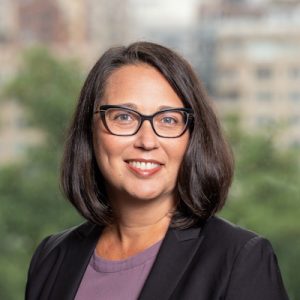
Dr. Nina Gray is the Associate Vice Provost for Research at New York University. Dr. Gray completed her undergraduate degree at MIT, PhD at Brown University, and postdoctoral fellowship at Brandeis University. She has more than 15 years of research and academic administration experience, starting at The New York Academy of Sciences and NYU Langone’s Neuroscience Institute. She was also the Associate Dean for the Sciences and Executive Director of the Advanced Science Research Center at the City University of New York's Graduate Center. Now, she works with leaders across NYU’s 3 campuses and 17 schools and colleges to foster interdisciplinary research, knowledge creation, scholarship, and innovation through partnerships and collaborations and by prioritizing integrity and inclusion.Dr. Nina Gray, Associate Vice Provost for Research Planning and Analysis, New York University
Event Information
October 16, 2025, 6:00 PM to 8:00 PM
NYU Langone Health 540 1st Avenue New York, NY 10016
Organizer(s): University of Cologne New York Office, German Center for Research and Innovation (DWIH) New York, Consulate General of the Federal Republic of Germany in New York, German Research Foundation (DFG) North America, NYU Langone Health
Video Recording
This panel discussion will be recorded and can be watched later in the playlist “University of Cologne New York Office // Events” on the YouTube channel of the University of Cologne.