-
 © Britta Schumacher
New Book Release by Columbia Global Reports
© Britta Schumacher
New Book Release by Columbia Global ReportsFour Questions for Cameron Abadi
The DWIH New York had the pleasure of interviewing Cameron Abadi, author of the book “Climate Radicals” which will be published in the fall by Columbia Global Reports. In the book, Abadi profiles the fascinating activists of Letzte Generation, known for gluing themselves to street intersections and throwing food on works of art; Ende Gelände, which demands the immediate phaseout of coal by occupying mines; and the German leaders of the global coalition Fridays for Future, which organizes school strikes (on Fridays) and many other large-scale demonstrations. Read more about Cameron’s background, the idea behind the book and its implication for future policymaking in Germany and the United States in this interview.
-
 News from the University of Freiburg
United Nations Forum on Forests: “Reforestation is not a simple story of win-win”
Interview with Daniela Kleinschmit, Professor of Forest and Environmental Policy and incoming President of the International Union of Forest Research Organizations IUFRO.
-
 New Associated Supporter of the DWIH New York
Four Questions for Martin Setzkorn
The DWIH New York had the pleasure of interviewing Dr. Martin Setzkorn, Head of the Center of Digital Innovation and Head of Center of Entrepreneurship at the University of Rostock. The University of Rostock has been one of two new associated supporters of the DWIH New York since May 2024.
-
 © Portrait: Cherie Birkner / Frame: DWIH New York
Events in March 2024
© Portrait: Cherie Birkner / Frame: DWIH New York
Events in March 2024Five Questions for Natascha von Hirschhausen
The DWIH New York had the pleasure of interviewing Natascha von Hirschhausen and thereby coming back to the 2022 DWIH Focus Topic “Sustainable Innovations”. Natascha is a Berlin-based zero-waste fashion designer and founder.
-
 © HPI / Kay Herschelmann
News from the Hasso Plattner Institute
© HPI / Kay Herschelmann
News from the Hasso Plattner InstituteService to the Scientific Community
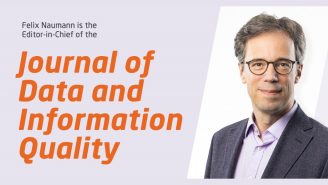
Prof. Felix Naumann, head of the “Information Systems” department at Hasso Plattner Institute (HPI), is the new editor-in-chief of the “Journal of Data and Information Quality” (JDIQ). The HPI talked to him about his work as editor-in-chief and the focus of the journal.
-
 #DWIHzeitgeist February 2024
Three Questions for Ekkehard Strauss
The DWIH New York had the pleasure of interviewing Prof. Ekkehard Strauss, speaker at our online event #DWIHzeitgeist – Science Diplomacy in Practice on February 1, 2024, and a professor at the Berlin School of Economics and Law (HWR Berlin), part of UAS7 – German Universities of Applied Sciences, one of the DWIH main supporters with an office in New York.
-
 © Jana Bauch / University of Cologne
News from the University of Cologne
© Jana Bauch / University of Cologne
News from the University of CologneThe New University of Cologne Rectorate Takes Office Under the Direction of Professor Mukherjee
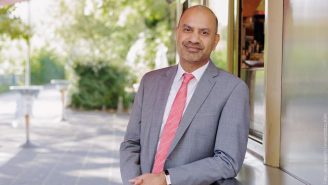
As of October 1, 2023, DAAD President Professor Dr. Joybrato Mukherjee is the new Rector of the University of Cologne. In addition, a newly elected team of Vice-Rectors takes up the operational divisions.
- DWIH New York
- Topics
- Network
- Research & Innovation
- Activities